When most of us picture gold, we imagine something finished: a polished bullion bar, a shiny coin or a glittering piece of gold jewellery.
But gold doesn’t start out that way.
Long before it reaches a refinery, mint or jeweller’s workbench, gold can exist as tiny flakes, grains and even nuggets hidden through the natural landscape. One of the best-known examples is placer gold, the same type of gold that has sent generations of prospectors wading into rivers with pans in hand.
What Is Placer Gold?
Placer gold is gold that has been naturally separated from its original rock deposit and concentrated elsewhere through erosion, gravity and moving water.
The process can take thousands of years.
Gold may begin locked inside mineralized rock, sometimes referred to as a lode or hard-rock deposit. Over time, weathering and erosion gradually break that rock apart, freeing particles of gold. Water, ice and gravity can then transport the material away from its original source.
Gold has one particularly useful characteristic at this stage: it’s extremely dense.
As streams and rivers carry sediment downstream, lighter material is more easily swept away. Gold tends to settle where the water loses enough energy, allowing particles to accumulate in cracks, gravel beds and other natural traps.
Dust, Flakes and Nuggets
Placer gold can take many forms.
At its smallest, there are fine particles often described as gold dust or flour gold. Slightly larger pieces may appear as flakes that have been flattened and smoothed through natural movement.
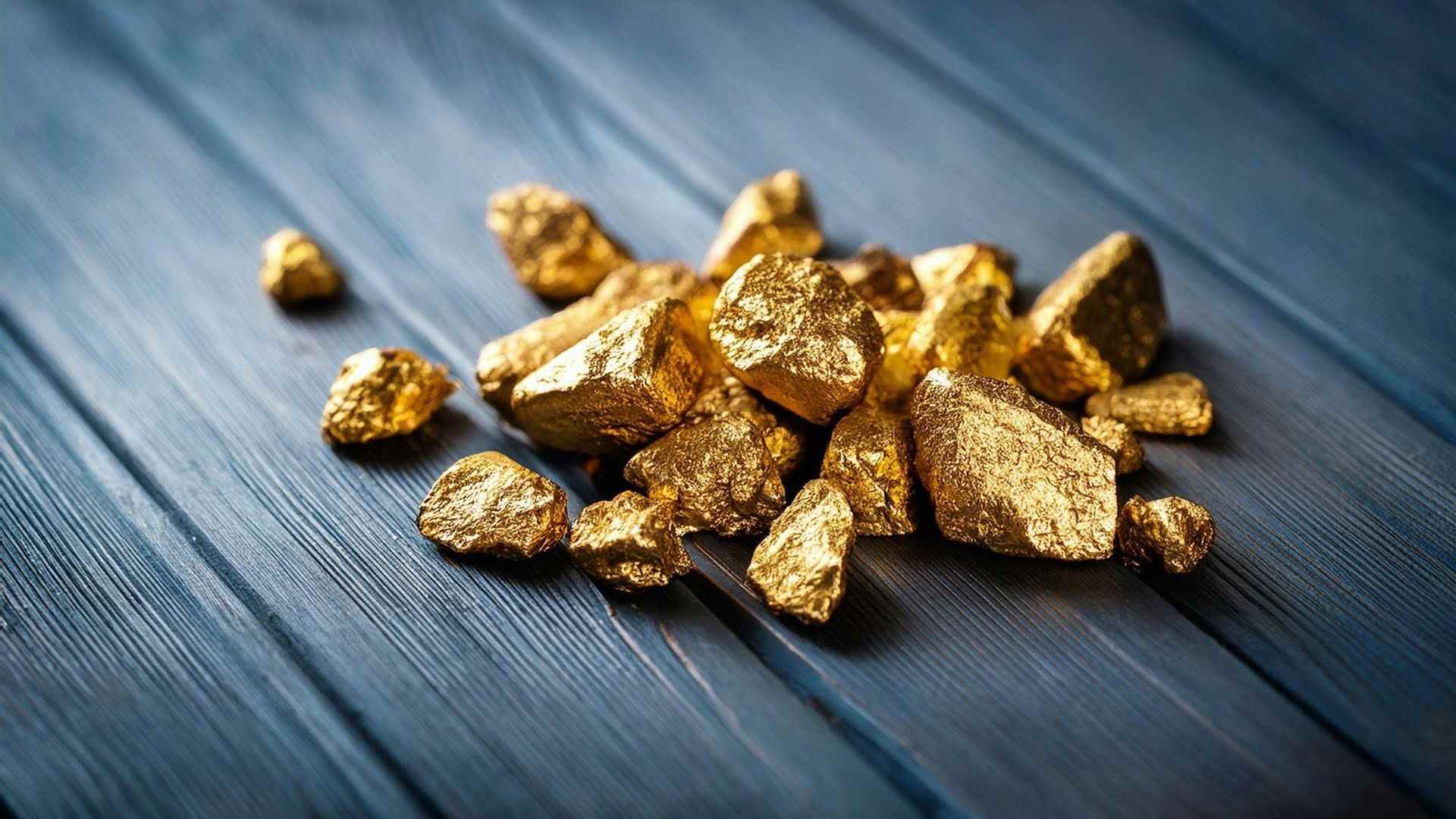
And then there are the pieces every prospector hopes to see in the bottom of the pan – gold nuggets.
Nuggets can range considerably in size and shape, sometimes containing quartz or other mineral material from the surrounding geology.
Whatever the form, placer gold has one important characteristic in common: unlike a minted bullion product, its purity isn’t stamped conveniently on the side.
Is Placer Gold Pure Gold?
Not necessarily.
Naturally occurring gold can contain varying amounts of other metals, particularly silver, as well as copper and other elements depending on the geology of the deposit.
That means two nuggets that look remarkably similar could have different gold purities.
Location can sometimes provide clues because gold from the same geological region may share certain characteristics, but appearance alone isn’t enough to determine exactly how much pure gold a sample contains.
That’s an important distinction between placer gold, lode gold and refined bullion.
Placer gold has been naturally freed and concentrated through erosion. Lode gold remains associated with the original mineralized rock deposit. Refined bullion has gone through industrial processing to remove impurities and achieve a specified purity, often 99.9% or higher.
In other words, a gold nugget and a gold bar may contain the same precious element, but they’ve taken very different journeys.
How Is Placer Gold Evaluated?
With a recognized bullion coin or bar, weight and purity may already be known. With placer gold, those characteristics need to be assessed.
Depending on the sample, an evaluation can involve examining its physical characteristics, determining its weight and using appropriate testing methods to better understand its precious metal content. Technologies such as X-ray fluorescence (XRF) can provide information about the elemental composition at the tested surface, while other testing methods may help build a more complete picture of the material.
Irregular nuggets, quartz inclusions and other natural features can make raw gold more complicated to evaluate than a uniform piece of refined bullion.
Is a Gold Nugget Worth More Than Its Gold?
For many placer gold samples, value is closely related to how much fine gold they contain and the prevailing gold price. But an unusual natural nugget can be a different story.
Size, shape, rarity and overall appearance may make certain specimens desirable to mineral collectors or gold enthusiasts beyond their underlying metal value.
That doesn’t mean every nugget carries a collector premium, but it does showcase what makes natural gold so fascinating.
A bullion bar has been refined, standardized and shaped by people. A placer nugget has been shaped by geology, erosion, water and time; no two are quite the same.
If you have placer gold, nuggets or other precious metal items you’re curious about, a professional evaluation can help you better understand what you have and its precious metal content.
Sometimes, the most interesting gold isn’t the kind that comes neatly stamped with a purity and serial number. It’s the kind that comes with a little dirt and a much longer story.